
The topic of “how to get rid of acne scars” is always in your mind all the time. Once upon a time back in high school around the year of 2011, I still remember that one day suddenly it became a talk among the girls about a new way and the existence of a fantastic tool to remove blackheads and acne. One of them would pull it out of their pouch and show us the awesome ‘wand’. I came to find out that it was a tool called blackheads extractor.
The thing is, a lot of us were not aware of the side effects and the harm of using the tool, especially given that we were not professionals. The result was, those that rode the trend were left with acne scars. Now, how to get rid of acne scars which were done by that action?
I admit that I joined the trend but did not pass the point of scarring, only tiny pigmentations (thank God). However, it is the contrary for most of my fellow schoolmates. Years later, I would search on the internet ‘how to get rid of acne scars?’ to see if it was possible. We were young and naïve, so let’s forgive yourself for messing with our skin during teenage-hood. Regretting will not recover your skin but taking the next step to move forward to find a solution, will.
Acne scars do not have to be permanent; you can change the fate of your skin as long as you’re still alive. Before we unfold on how to get rid of acne scars, I will explain how it happens, as well as how the blackheads or acne extractor tool can mar your skin and leave scars.
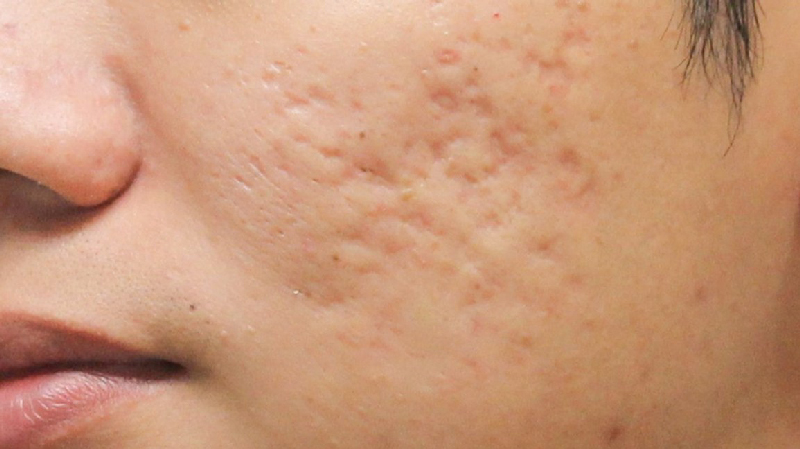
Acne scars are actually very common and usually will heal by itself over time unless it’s severe acne especially cystic acne. Regular acne scars are usually brown or light red pigmentation. Severe acnes in most cases will leave permanent scars as they heal. Other than that, those that love to pick and squeeze their pimples instead of treating them will also face permanent scarring.
For your information, 80% of people between the age of 11 and 30 will get acne, and 1 out of 5 of them will develop scars. (Clinic, n.d.)
Let’s look into one of the examples of picking and squeezing pimples below.
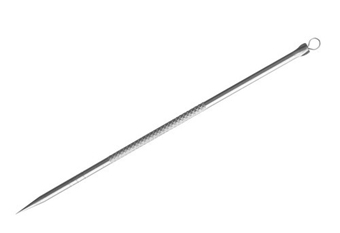
In the hands of the unprofessional, yes, I do mean us as teenagers and us in the present time- unless of course, you’re a dermatologist or a certified aesthetician now-, this tool will do more harm than good to your skin. It is because when the extractor presses onto the skin to ‘pop’ a pimple or a blackhead, it can cause small tears and further push your pimples or blackhead deeper into the dermis.
This can result in breaking the skin barrier with the dirt and bacteria will ‘throw a party’ by spreading and cause an infection that leads to more growth of inflamed pimples. These pimples will later on leave a deep scar and pigmentation on your skin, according to a dermatologist, Morgan Rabach, M.D.
Sounds like a nightmare, does it not? So, leave the pimple popper tools to the professional because they sterilize, and they are well equipped with the next steps of removing your pimples and blackheads in the safe way. Let’s also not forget, this also applies to using your own nails and fingers.
Just don’t do it even if you are extremely itching to do so because your future self will thank you for your self-control. Instead read this article on how to get rid of acne to honor your skin.
Also, do not confuse regular acne with fungal acne. It can be tricky to identify fungal acne and some regular acne medication can make fungal acne worse, so we advise you to seek with your doctor first. Refer to this article on how to treat fungal acne.
How to treat your acne scars? Well, there is one product that I can recommend for you – Clearogen.
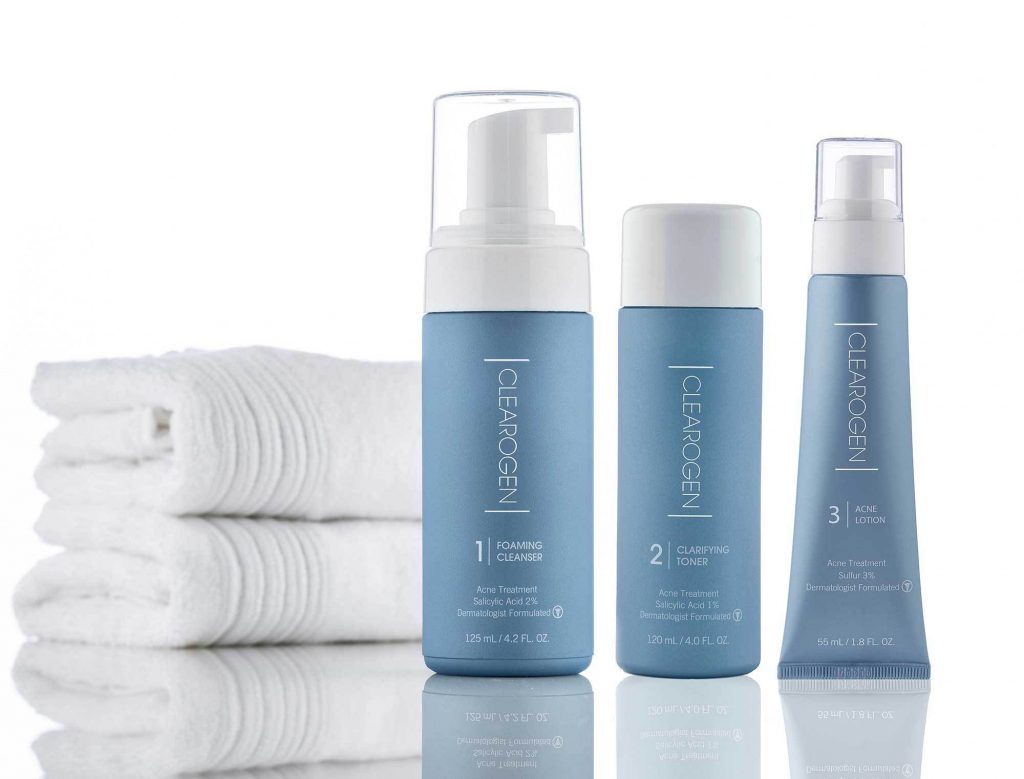
Clearogen’s proven, natural ingredients deliver results without side effects. With just three simple steps, Clearogen makes it easy to effectively treat your acne.
Foaming Cleanser – clear the skin of dirt, makeup, oil and bacteria, while keeping skin moisturized and balanced.
Clarifying Toner – contains botanical extracts and Salicylic Acid to decrease the pore size, redness and inflammation of existing acne, for rejuvenated and healthier skin.
Acne Lotion – contains the DHT acne solution that has the natural ingredients, proven to reduce DHT production and restore normal oil production to the skin. It also contains gradual-release Sulfur, to open the pores and kill bacteria.
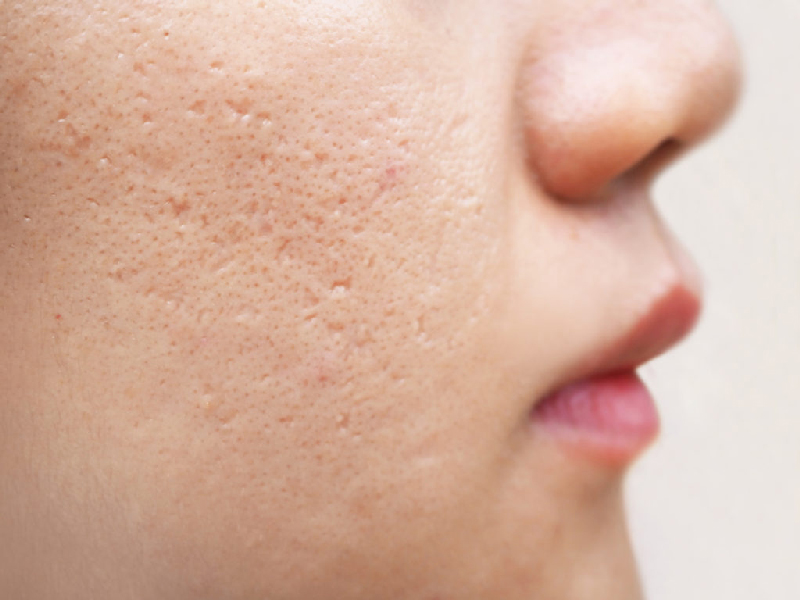
(image retrieved from Beautyinsider )
Ice pick scars are very small but deep which extend into the dermis. It’s commonly found on the cheeks and it makes the skin look like it has been pierced by multiple sharp needles, hence the tiny holes. Ice-pick scars can be the result of cystic acne or other deep inflamed acnes that destroyed the skin tissues.
This type of acne scar requires aggressive treatment and it is safe to say that it’s the most difficult scar to treat. These are the only effective treatment for ice pick scars so far:

(image retrieved from MedicalNewstoday )
Boxcar scar is a common acne scar and a type of atrophic scars just like ice pick scars. They are usually round or oval-shaped skin depressions, giving the skin an uneven and pitted texture and appearance. This type of scar developed when an inflammatory breakout destroys collagen, resulting in lost tissues. When that happens, the affected skin area is left without support, followed by the creation of a depressed area. The severity of boxcar scars can range from superficial to severe.
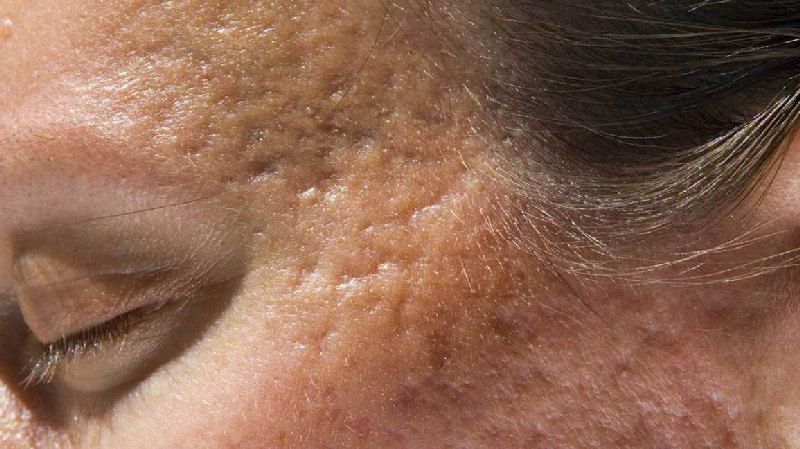
Rolling scars are wide depressions typically with rounded edges and an uneven, rolling appearance. Unlike boxcar scars, this one makes the person have a rougher look and the scars are more defined.
According to a licensed aesthetician specialized in acne treatment, Angela Palmer, this scar arises when fibrous tissue bands grow between the skin and the hypodermis (the lowest 3rd layer of skin). The fibrous tissue bands will pull the epidermis, binding it to hypodermis. This causes the creation of the rolling appearance of the skin because our top layer of the skin which is epidermis is being pulled beneath.
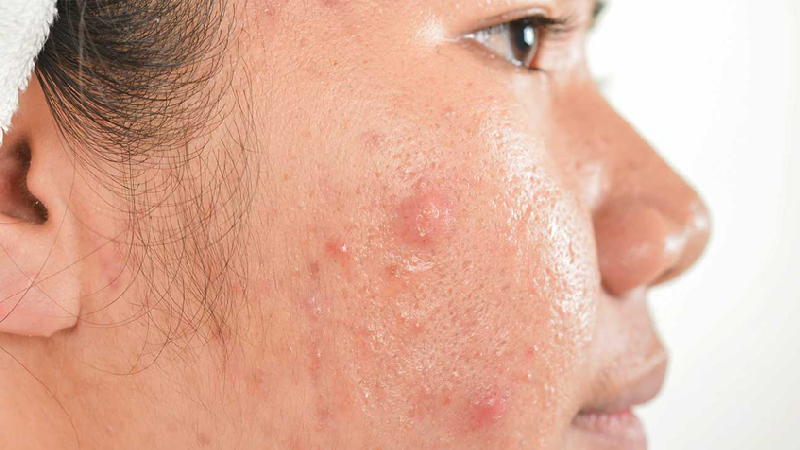
Hypertrophic scars occur when collagen is being produced way too much in the acne spot during the process of acne healing. It is a raised scar which makes your skin look bumpy. These are common to be found on the chest and back. The worst type of raised scars is keloid scars where the affected area will look darker and itchy.
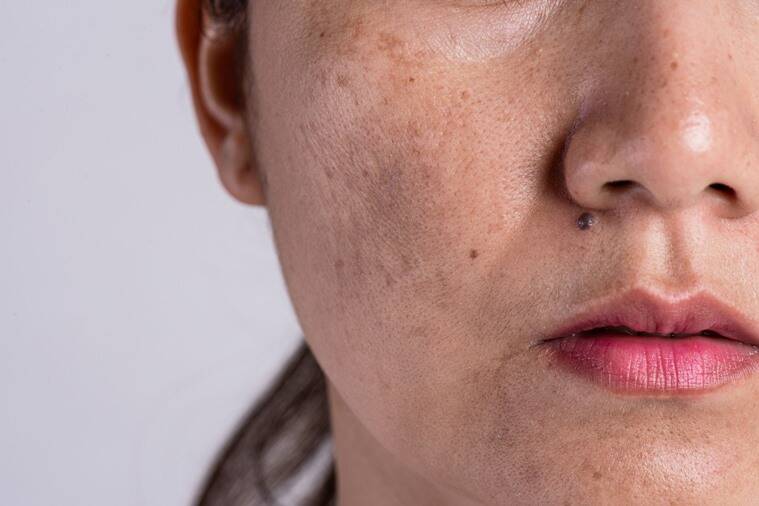
Please be noted that this is not really a scar, rather a hyperpigmentation left by the acne as it is healing and it can go away with time. Most people who have had itchy or inflamed acnes will have this discoloration afterwards. A lot of time this does not need any treatment but if you insist on speeding up the discoloration to disappear, you may get AHA (alpha-hydroxy acids) product over-the-counter. For the severe cases, you may get a prescribed topical retinoid from your healthcare provider or azelaic acid. (Palmer, 2020)
References