
What to Do if You Have Eczema and How to Cure Eczema Permanently?
Discolored skin patches are just an irregular area where there’s altered skin color. Various causes can lead to this skin condition. Some of the more common causes of skin discoloration on face changes are illness, injury, and inflammatory problems.

Discolored skin patches can also occur in certain parts of the body due to differences in melanin levels. Melanin is the substance that provides color to and protects the skin against sun exposure. When there is a problem with the amount of melanin in an area of your skin, it can result in uneven skin coloring.
What Is Skin Discoloration?
Hyperpigmentation & hypopigmentation are both a form of skin discoloration. They mean that there has been a change in the pigmentation of your skin, either an overly darkening or an excessively lightening.
It’s normal to see your skin age and develop dark spots. This can happen from going out in the sun too often and we have solutions to help you cover them up.
For example, other reason for pigmentation on face such as melasma and solar lentigo (brown spots formed due to the sun exposure) can be seen on different areas of your body. From some minor spots on your face to larger patches, skin discoloration can make it hard for you to feel confident.
Why Does Skin Discoloration Develop?
Skin discoloration happens when melanin production becomes excessive, leading to a change in your natural skin tone.
Your skin cells, melanin’s producers, are located in the epidermis’ base layer. They help protect your skin from UV radiation by producing the pigment.

When your skin is exposed to sunlight, your melanocytes produce more melanin and as a result, you become tan.
Most forms of skin discoloration develop when certain areas of your skin produce more melanin than others. As an example, age spots are often caused when skin cells produce more melanin (dark pigment) than usual. This can lead to discolored & darker looking spots on your skin.
You’re not the only one who thinks this, there are lots of other experts who believe that melasma could be related to an inappropriate amount of melanin in some parts of your skin.
Read also: How to remove dead skin
How to Get Rid of Facial Skin Discoloration
There are several ways to treat skin discoloration on face, depending on its severity. Mild to moderate cases can often be treated through topical care & medication such as retinoids, hydroquinone, and peeling agents.
If your hyperpigmentation is severe, you may want to consider a skin resurfacing procedure.
If you have any kind of skin discoloration, I recommend talking to your healthcare provider. He/she may be able to recommend a suitable treatment for you and work with you on how we can improve the issue together.
How to Treat Skin Discoloration
Skin discoloration and melasma can come back if you don’t take care of it. If you are dealing with this condition, here are some basic steps to follow:
1. Protect yourself from the sun

Whenever you spend any time in the sun, it’s important to wear sunscreen that protects against UVA & UVB rays. Even if the weather isn’t too bright out, you can still get a lot of direct exposure in places like offices or stores.
Sunscreen protects your skin from all the harmful UV rays, so you should be wearing it when you’re at the beach or pool. If you’re going to protect your face and eyes, then wear a hat and sunglasses, especially if it’s a bright day with lots of sun. Keratin treatment can not only protect you against color fading, it also reduces your risk of developing wrinkles and other signs of aging.
2. Cover up affected areas of your body

Always wear clothes that protect your skin from the sun, even when you are outside. For extra protection, look for clothing with an ultraviolet protection factor (UPF) label.
3. Treat acne and other skin conditions
Dark spots often occur after acne breakouts or skin disorders clear up. Treating these conditions can reduce the risk of dark spots developing in the first place. Our guide to the best acne treatments can provide you with more in-depth information on the most effective ways to prevent & treat acne.
4. Avoid squeezing or popping pimples
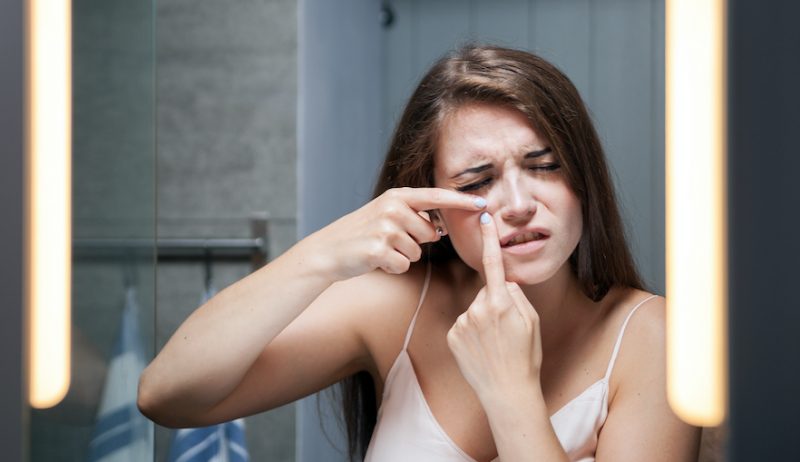
If you have a history of dry and acne-prone skin, be careful not to pick at your pimples when they pop up. This can easily lead to scarring from picking or from popping the pimples.
5. Use sensitive, gentle skin care products
Products that irritate the skin may cause problems like melasma and other forms of discoloration. You should only use products that you know won’t make your skin worse.
In Conclusion
Discoloration usually manifests on your face, neck, or other exposed parts of your body. Sometimes it affects other regions-typically the ones exposed to sunlight.
While abnormal skin coloration usually isn’t a big issue, it can change your appearance and even how you feel about yourself.
If you have skin discoloration on face, you can tackle it by using skin care products such as tretinoin, azelaic acid and the like.
For more severe discoloration, it might be good to talk with a dermatologist about the cosmetic medications they prescribe. These may improve your skin’s color, tone, and texture.
Read also: How to get rid of acne
References
Discolored Skin Patches: Pictures, Causes, and Treatments. (2022). Retrieved from https://www.healthline.com/health/discolored-skin-patches
How to Get Rid of Skin Discoloration on Your Face | hers. (2021). Retrieved from https://www.forhers.com/blog/how-to-get-rid-of-skin-discoloration-on-face